
The President Changes. The Strategy Doesn’t
American Primacy, Structural Entrenchment, and the Path to Permanent Conflict

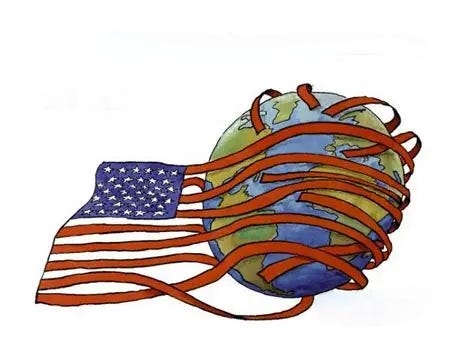
On 8 March 1992, the New York Times published a front-page report under the headline “U.S. Strategy Plan Calls for Insuring No Rivals Develop,” based on a leaked draft of the Pentagon’s Defense Planning Guidance for fiscal years 1994 to 1999. The document, drafted under the supervision of Paul Wolfowitz, then Under Secretary of Defense for Policy, and co-authored with I. Lewis Libby, described the United States as the world’s sole superpower following the collapse of the Soviet Union and made the prevention of any rival power’s emergence, whether in Europe, Asia, or the former Soviet space, the central, organising objective of American grand strategy. The draft stated that the United States should be prepared to act alone, that it should maintain military strength beyond challenge, and that it should preempt threats from states seeking to acquire weapons capable of projecting regional power. The public backlash was sufficient to prompt a redraft that softened phrases about acting “unilaterally” to “with only limited additional help,” a cosmetic revision that Libby justified to Dick Cheney, then Secretary of Defense, on the grounds that such formulations were “more defensible” while preserving identical strategic substance.
