
Project Freedom: "The Computer Says No"
Saudi Arabia and Kuwait’s reported shutdown of US military access exposed the growing limits of Washington’s power projection and the collapse of automatic Gulf alignment behind American escalation

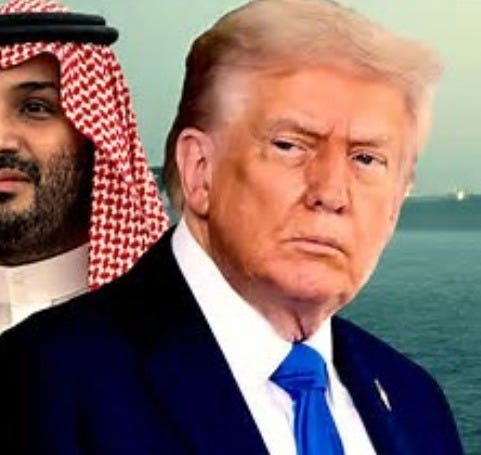
Trump’s “Project Freedom” appears to have run headfirst into the reality that the Gulf monarchies are no longer willing to function as automatic staging grounds for American military adventurism, especially when they are treated as subordinate actors rather than sovereign partners. According to NBC News reporting and Ryan Grim’s sourcing, Saudi Arabia and Kuwait suspended US military access, including basing, overflight permissions, and operational support, effectively crippling the logistical architecture Washington relies on to project power across the Gulf. The reported Saudi refusal to allow aircraft to launch from Prince Sultan Air Base or transit Saudi airspace is particularly significant because it exposes how dependent US regional operations remain on Gulf cooperation despite decades of assumptions about permanent American military primacy.
(Trump’s Project Freedom lasted one day - Mission unsuccessful. 24hrs after launching it, Trump tweeted: “Project Freedom has been terminated”)
The deeper story here is not simply operational disruption. It is a structural shift in Gulf strategic behavior. Riyadh under Crown Prince Mohammed bin Salman has spent years repositioning Saudi Arabia away from total dependence on Washington and toward a transactional multi-alignment strategy balancing the United States, China, Russia, and regional powers simultaneously. Trump reportedly announcing a major military initiative on Truth Social before consulting the Saudis would have been interpreted in Riyadh not merely as disrespect, but as an attempt to drag the Kingdom into escalation without consent, preparation, or political cover. That crosses a line Saudi leadership increasingly refuses to tolerate.
The Saudi reaction also reflects fear of regional blowback. Gulf monarchies understand that if the United States launches operations from their territory, they immediately become exposed to retaliation against critical infrastructure, energy facilities, shipping lanes, desalination plants, and financial hubs. The memory of the 2019 attacks on Saudi oil infrastructure at Abqaiq Oil Processing Facility still shapes strategic thinking in Riyadh. The Gulf states know that American security guarantees are not absolute, and they increasingly doubt Washington’s willingness or capacity to absorb costs on their behalf if escalation spirals.
Kuwait’s reported alignment with the Saudi position matters just as much. Kuwait has historically been among the more dependable US security partners in the Gulf since the aftermath of the Gulf War. If Kuwait is now willing to restrict operational access during a crisis, it signals broader Gulf concern that Washington’s regional decision-making has become impulsive, personalized, and politically volatile. Gulf rulers prefer predictability above all else. Surprise military announcements through social media are the opposite of predictability.
The mention that Qatar and Oman were also blindsided is revealing because both states traditionally specialize in quiet diplomacy and strategic hedging. Qatar hosts enormous US military infrastructure, while Oman has long served as a discreet mediator between Washington and adversarial regional actors. Alienating both simultaneously suggests a breakdown not only in operational coordination but in the diplomatic ecosystem that normally cushions American power projection in the Gulf.
Most consequential is the air defense dimension. Saudi cooperation is not just about runways and refueling. The Kingdom forms part of the wider integrated radar and missile defense network that helps secure Gulf shipping lanes and US naval movement. Removing that umbrella fundamentally alters the risk calculus for American assets operating in or transiting the region. It means Gulf partners may no longer be willing to automatically absorb strategic exposure for operations they did not authorize or politically endorse.
What this episode really exposes is the erosion of the old post–Cold War assumption that Gulf monarchies will always subordinate their own stability concerns to Washington’s geopolitical agenda. The region has changed. Gulf states are wealthier, militarily stronger, diplomatically more autonomous, and increasingly convinced that American leadership is inconsistent. They watched the chaotic withdrawal from Afghanistan, the fluctuating US posture toward Iran, and years of mixed signals about security commitments. Their conclusion has been to maximize autonomy and avoid becoming trapped inside another open-ended confrontation engineered in Washington.
The collapse of “Project Freedom” was not just a tactical setback, this was a visible demonstration that the infrastructure of American hegemony in the Gulf now depends on partners who are increasingly willing to say no.
Thank you for visiting. This is a reader-supported publication. If you believe journalism should serve the public, not the powerful, and you’re in a position to help, becoming a PAID SUBSCRIBER truly makes a difference. Alternatively you can support by way of a cup of coffee:
https://buymeacoffee.com/ggtv |
https://ko-fi.com/globalgeopolitics |
Bitcoin: 3NiK8BoRZnkwJSHZSekuXKFizGPopkE7ns
Trump has caused the world to turn away from America because they can no longer rely on a tantrum throwing toddler in the White House. America is no longer the leader of the Western World, while he has been playing at war, the rest of the world has gone and made new trade agreements and alliances with strategic partners, who align with democracy, In my opinion, if Trump does not withdraw from Iran, America will be heading for another civil war and god help you all
The guy is unsufferable, crude utterly corrupt, but his truth social and the lego campaign has
opened millions or more of eyes at least of those that haven't been coopted by the three or
four sects that converge in western powers.
I asume that it will be the generational newcomers that will break away, unless they will
be lighting fire as hunter gatherers did
Your Patagonian-Spanish follower